Some cars look aggressive. This one looks like a threat.
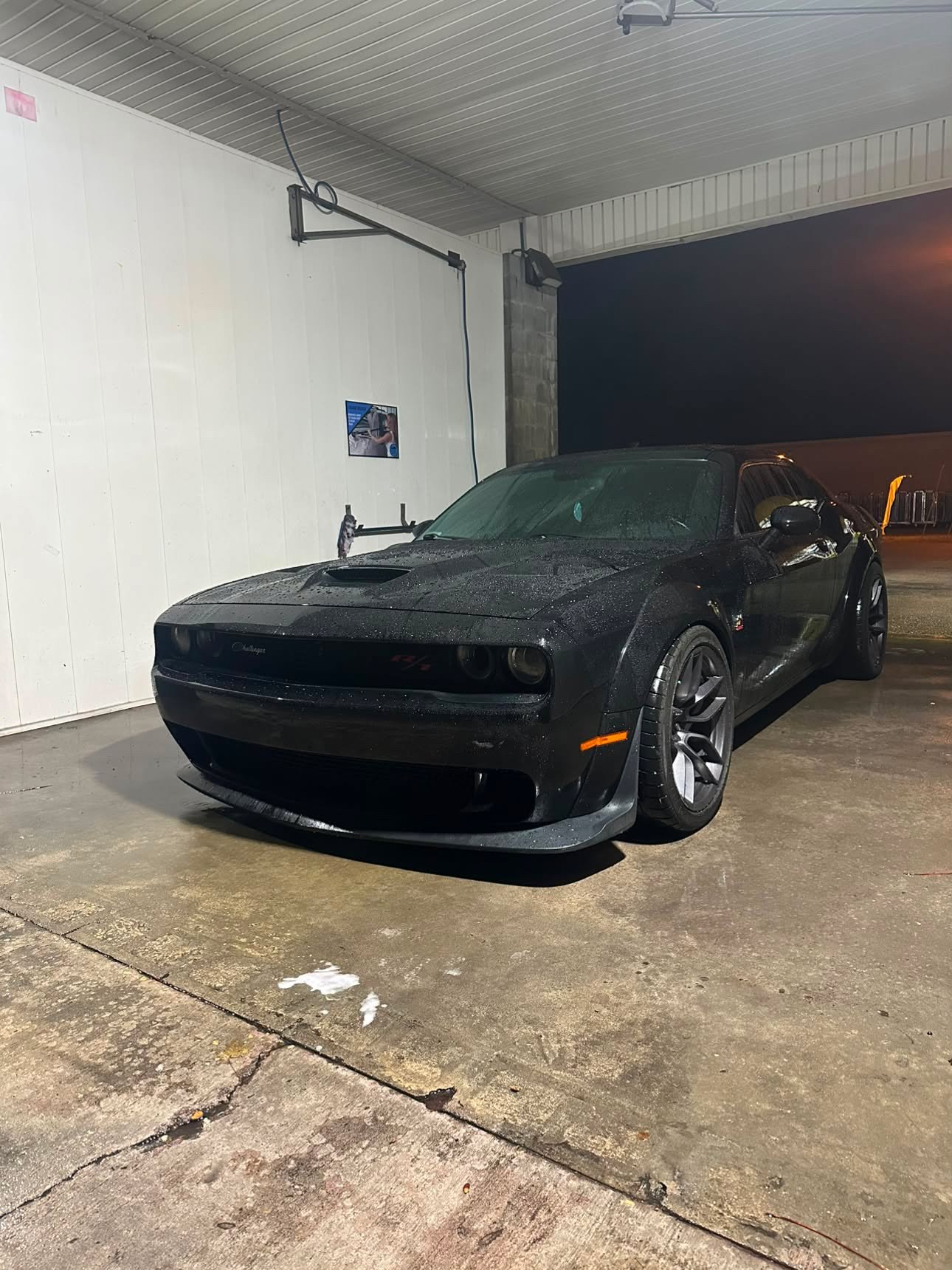
When a fellow enthusiast sent over these photos, we knew immediately this needed to be on The SRT Garage. A blacked-out Dodge Challenger Scat Pack Widebody, sitting low in a clean garage with an American flag on the wall — that is not just a car. That is a statement.
The Widebody Treatment
The Challenger Widebody arrived from the factory as Dodge answer to one question: what if we made the Challenger look even more menacing? The answer is those flared fenders — stretched nearly 3.5 inches wider than the standard Challenger — allowing for a dramatically wider stance and 305-section rear tires. On this build, the all-black exterior makes the widebody flares look almost seamless. No chrome. No contrast. Just dark, purposeful aggression.
The Details That Make It
Blacked-out everything. The wheels, badges, mirrors, window trim — nothing shines except the paint. A coherent aesthetic choice that takes discipline to pull off.
The stance. Sitting noticeably lower than stock — the result is a car that looks planted and purposeful rather than riding high like it just rolled off the lot.
Red brake calipers. The one flash of color in this entire build. Against all-black everything, those red Brembos hit like an exclamation point.
Why the Scat Pack Widebody Is a Different Animal
People sleep on the Scat Pack and that is a mistake. The 6.4L naturally aspirated HEMI makes 485 horsepower and 475 lb-ft of torque — no supercharger needed. 0-60 in the low 4-second range, quarter mile in the high 12s. The Widebody package adds wider Pirelli P Zero tires, SRT-tuned adaptive damping, Brembo six-piston brakes, and those unmistakable fender flares. And that naturally aspirated HEMI note at high RPM? No supercharger whine. Just displacement and fury.
Scat Pack vs Hellcat Widebody — Which to Buy?
The Hellcat Widebody adds 232 horsepower and costs significantly more. The Scat Pack argument: lower insurance, lower fuel costs, the same wide body, the same Brembo brakes, and a naturally aspirated engine that rev-hangs beautifully. For a daily driver or canyon carver — the Scat Pack Widebody is arguably the smarter buy. This build makes a strong case for it.
This Is How You Daily a Widebody
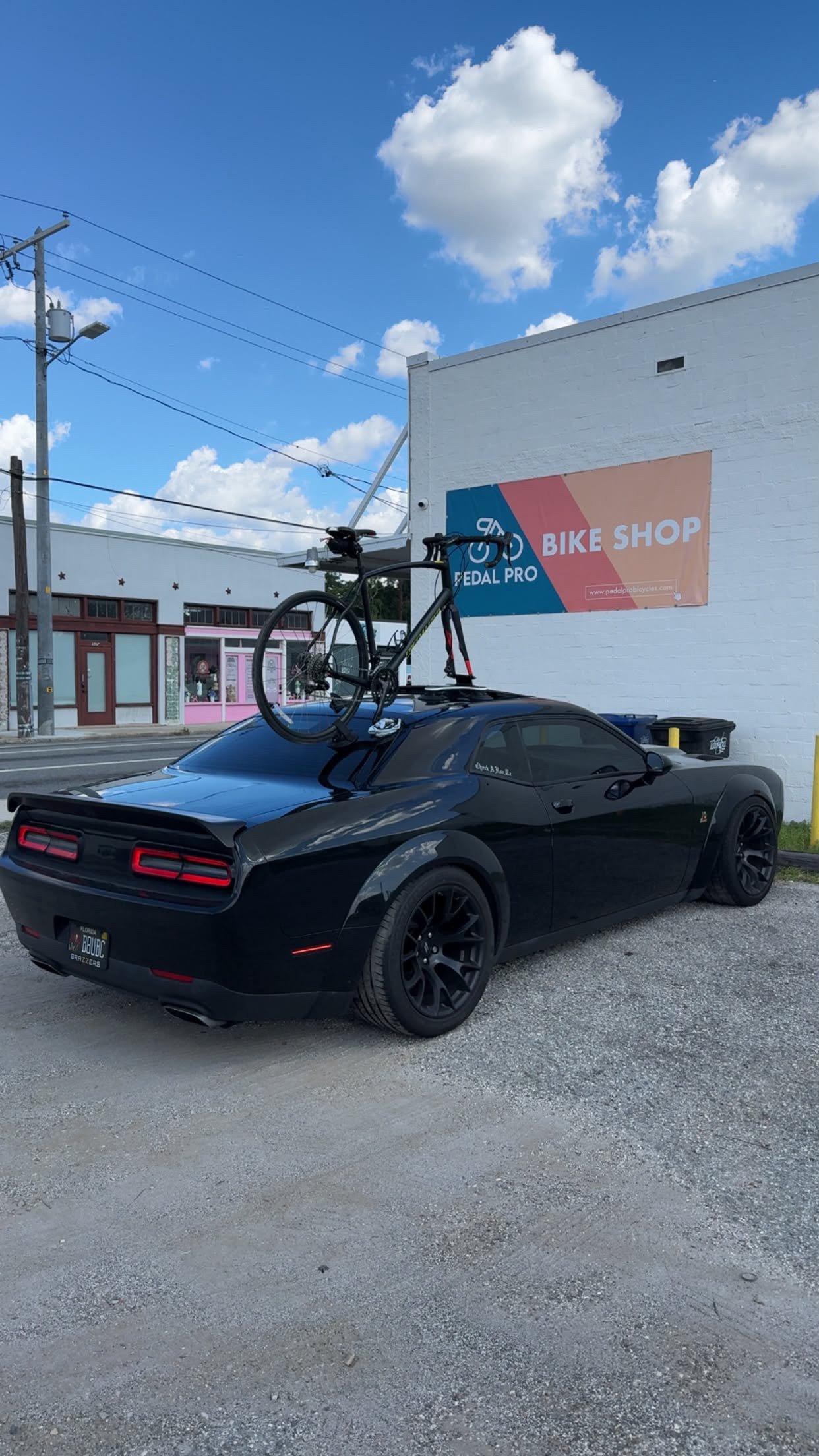
One photo shows the Challenger with a bike rack on the roof outside a bike shop. That is the thing about Widebody owners non-enthusiasts do not understand: these cars get used. The point is to enjoy them.
The Verdict
Clean. Committed. Coherent. Every modification points the same direction: darker, lower, meaner. You do not need a Hellcat badge to turn heads. This build proves it.
Got a build to feature? Contact us. Challenger issues? Try our free AI Diagnostic Tool.
The Widebody Package — What It Actually Changes
The Challenger Widebody is not just a visual package. The wider fenders allow fitment of 305-section rear tires — significantly wider than the 275-section tires on the standard Challenger. Those wider tires mean more rubber in contact with the road, which translates to better traction under power, more mechanical grip in corners, and a more planted feel at speed. The Brembo brake upgrade that comes with the Widebody package — six-piston front calipers — is a genuine performance enhancement that reduces fade and improves stopping distances under repeated hard braking.
The Scat Pack vs Hellcat Question
The Scat Pack Widebody sits in an interesting position in the Challenger lineup. The 485-horsepower 6.4-liter naturally aspirated HEMI is often overlooked in favor of the 717-horsepower supercharged Hellcat, but many experienced SRT owners argue the Scat Pack is the better driver’s car. The naturally aspirated engine has a more linear power delivery — it builds as the RPMs rise rather than hitting you all at once like a supercharged engine. The Scat Pack also costs significantly less than the Hellcat, leaving money for mods, insurance savings, and tires that get used rather than preserved.
The American Flag Garage
There is something specifically American about this build. The American flag on the garage wall is not decoration — it is context. A black Challenger Widebody, a garage with an American flag, and a car that represents 50 years of American muscle car heritage. The Challenger’s production run from 1970 to 2023 is one of the longest continuous performance car runs in American automotive history. This particular build understands that context and leans into it without trying too hard.
Why This Build Works
The reason this Challenger works as a build is consistency. Every decision points the same direction. The color choice — black — eliminates visual noise and puts the body lines front and center. The wheel choice — blacked out — reinforces the monochrome theme without looking cheap. The lowered stance — whether springs or coilovers — gives it visual weight without being a ground-scraper that cannot navigate speed bumps. The red Brembo calipers are the one intentional contrast element, and they work precisely because they are the only contrast. This is not a car that happened — it is a car that was thought through.
About the Author
Azriel Wilkinson is a United States Air Force veteran with 7 years of aircraft maintenance experience and a Jeep Grand Cherokee SRT owner based in Colorado Springs, Colorado. He founded The SRT Garage to provide honest, experience-based information for SRT enthusiasts who want real answers — not recycled specs. Learn more about The SRT Garage.
About The SRT Garage
The SRT Garage is written by a United States Air Force veteran with 7 years of aircraft maintenance experience and a Jeep Grand Cherokee SRT owner based in Colorado Springs, Colorado. This site exists to provide honest, experience-based information for SRT enthusiasts who want real answers — not recycled specs. Learn more.